

Breast cancer remodels lymphatic vessels to accelerate its spreading
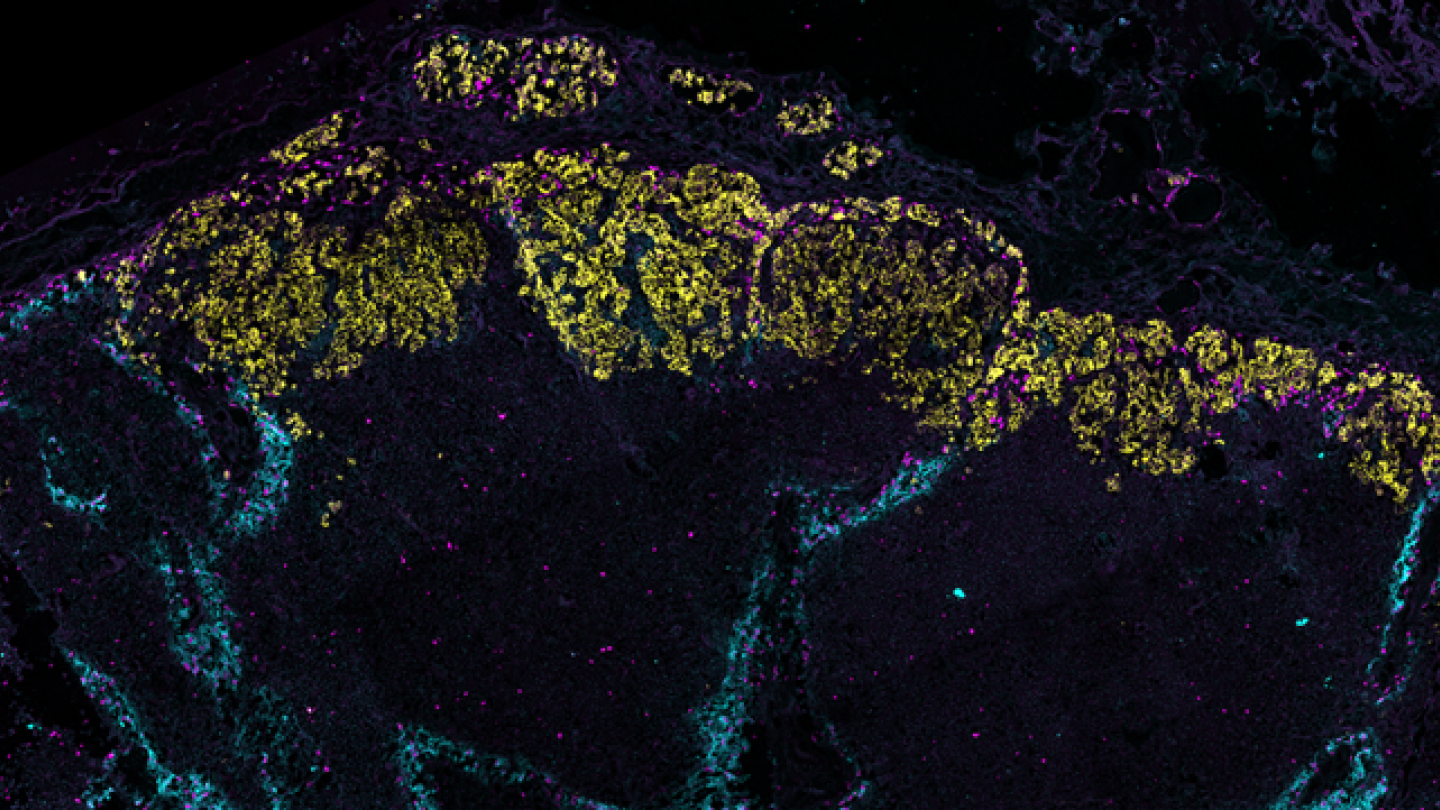
The image shows a lymph node in which cancer cells are marked with yellow. The blue veins are lymphatic vessels. Credit: Akira Takeda
By gaining more understanding of how cancer alters lymphatic vessels, we can develop targeted therapies that prevent this process and improve patient outcomes.”
FINLAND, December 3, 2025 /EINPresswire.com/ -- Breast cancer is able to modify the lymphatic vessels through which it travels to the draining lymph nodes. From there, it can then spread to other parts of the body. A new finding by Finnish researchers may help develop targeted therapies that could prevent this spread.— Academician Sirpa Jalkanen
The most dangerous feature of breast cancer is its ability to spread elsewhere in the body. Usually, the first sign of metastasis is that cancer cells are found also in the lymph nodes draining the tumor area. The first lymph nodes that cancer cells can reach via the lymphatic vessels are located in the armpit.
Researchers at the University of Turku in Finland analysed the cancer-originated changes in the lymphatic vessels. They found that significant molecular changes take place in the lymphatics when cancer spreads into the lymph nodes. Those changes support cancer cell travelling into the lymph nodes and further metastasis of the cancer elsewhere in the body.
The study also identified a specific protein, Matrix Gla protein (MPG), which cancer cells use to bind to lymphatic vessels. This molecule was upregulated in the metastatic lymph nodes of the studied patients, but not in the normal distant lymph nodes of the same individuals. MPG is a protein earlier known to be involved in bone formation but nothing was known about its role in lymphatic vessels before these studies.
“These results reveal a new perspective on why breast cancer spreads and why stopping it is difficult. By gaining more understanding of how cancer alters lymphatic vessels, we can develop targeted therapies that prevent this process and improve patient outcomes in the future,” says the head of the InFLAMES research consortium, Academician Sirpa Jalkanen.
The lymph node samples used for the studies were obtained from breast cancer patients at Turku University Hospital, emphasising the importance of collaboration between clinicians and researchers.
Breast cancer is one of the most common cancers among women worldwide, with millions of new cases diagnosed each year. In Finland alone, more than 5,000 women are diagnosed annually. Treatment outcomes in Finland are considered excellent also by international standards, as about 90 percent of patients are alive five years after diagnosis. The earlier breast cancer is found, the better the patient’s prognosis.
The findings have been published in the prestigious journal Nature Communications.
Sirpa Jalkanen
communications@utu.fi
University of Turku
Legal Disclaimer:
EIN Presswire provides this news content "as is" without warranty of any kind. We do not accept any responsibility or liability for the accuracy, content, images, videos, licenses, completeness, legality, or reliability of the information contained in this article. If you have any complaints or copyright issues related to this article, kindly contact the author above.
